
Microsoft’s 10-Q Highlights the Hidden Cost of AI Scale: Security and Trust Risk

Document analyzed: Microsoft Corp (MSFT) — Form 10-Q filed Jan 28, 2026.
Analysis style: Risk factors. Generated with StockCompass AI Pro.
Microsoft’s expansion across cloud and AI services is often framed as a scale advantage. The latest 10-Q highlights a parallel constraint: security and trust risks scale alongside infrastructure.
These risks are not theoretical. They translate into ongoing costs, execution complexity, and potential pressure on margins and customer confidence.
Why security becomes a structural cost
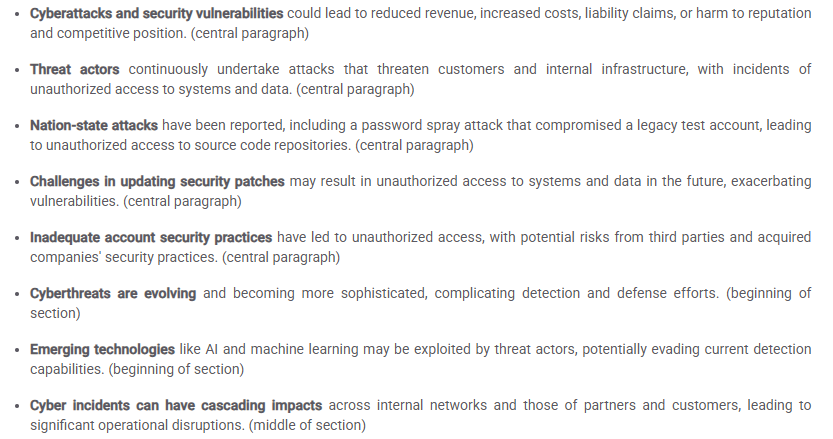
The filing describes a threat environment where cyberattacks are increasingly sophisticated and often linked to nation-state actors. As Microsoft delivers more cloud-based and AI-enabled services, the potential impact of security failures grows.
This shifts security spending from a discretionary investment to a structural operating requirement. Continuous upgrades, monitoring, and incident response become necessary just to maintain baseline trust.
Trust risk compounds execution risk
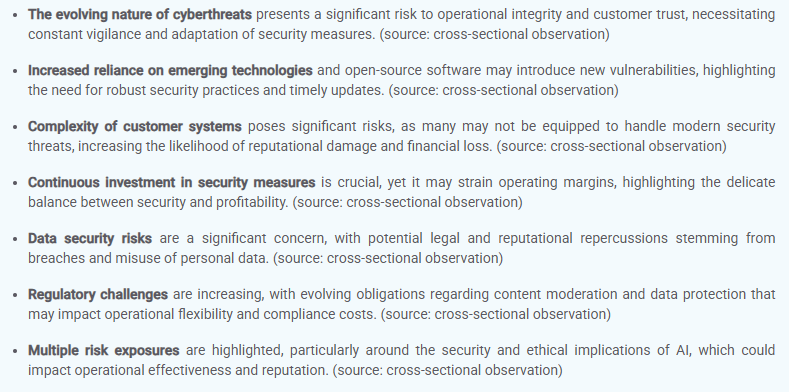
Security incidents can cascade. Even when core services remain operational, customer systems and data may still be affected. This creates reputational risk and raises the cost of customer retention.
In highly regulated industries, expectations around data protection and resilience further increase compliance and engineering costs.
The structural takeaway
Microsoft’s AI opportunity remains intact. The risk lies in how security and trust costs scale with it.
As AI adoption accelerates, maintaining reliability and trust may consume an increasing share of operating leverage.
Extracted in minutes
Connecting cybersecurity disclosures with AI scale requires careful reading across risk sections. This risk-focused analysis was generated in minutes using StockCompass.
Analyze a 10-Q with StockCompass
Disclaimer: This content is for informational purposes only and does not constitute investment advice.