
Inside Netflix’s 10-Q: Liquidity, Content Commitments, and Flexibility Risk

Document analyzed: Netflix Inc (NFLX) — Form 10-Q filed Jan 23, 2026.
Analysis style: Risk factors. Generated with StockCompass AI Pro in 15 seconds.
Netflix is often discussed through simple narratives: pricing power, engagement, ad-supported upside, and “content wins.” The 10-Q doesn’t contradict that story — but it exposes the constraint underneath it: less flexibility due to substantial indebtedness and long-term content commitments.
This is the risk-focused way to read Netflix: not “is demand collapsing,” but how quickly can the business adapt if the cost environment tightens or competition forces spend higher.
The constraint: when a media business loses flexibility
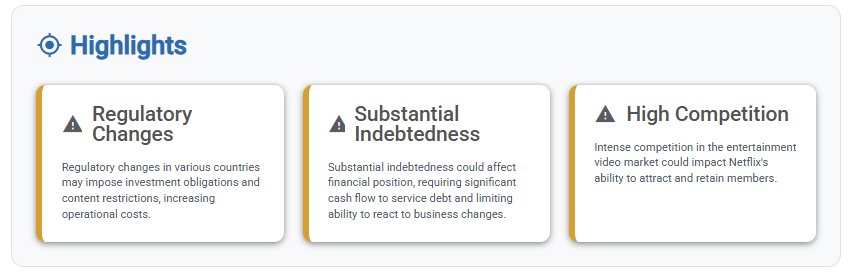
Netflix’s filing highlights three recurring pressure points: competition, regulatory changes, and the more structural one: indebtedness. But the real “risk engine” is what happens when debt meets long-duration content obligations.
The real risk: content commitments + debt = liquidity becomes strategic
In a subscription business, the market tends to focus on revenue and members. The 10-Q pushes you to focus on something else: liquidity under constraints.
1) Long-term content commitments reduce operating flexibility
Netflix explicitly flags that long-term content commitments can limit flexibility and pressure liquidity if performance doesn’t meet expectations. This matters because content obligations are not “optional” in the short run — they are the fuel required to stay competitive.
2) Substantial indebtedness hardens the downside
The filing also emphasizes substantial indebtedness: servicing debt requires meaningful cash flow and can limit Netflix’s ability to react quickly to business changes. In practice, this creates a sharper asymmetry: if the environment tightens, the range of strategic options narrows.

Secondary pressures that can amplify the core risk
Two additional themes in the 10-Q can amplify the liquidity/rigidity risk:
- Regulatory changes across countries may impose investment obligations and content restrictions, increasing operating costs — especially internationally.
- High competition raises the “minimum viable” content and product cadence required to retain members, which can force spending even when the cycle is less favorable.
These are not new risks. What’s new is how they interact with the constraint: when you have less flexibility, external pressure becomes more expensive.
A signal worth monitoring: insider selling plans
The 10-Q includes disclosures around Rule 10b5-1 trading plans adopted/terminated by senior executives and a director. These plans are not automatically bearish — but they are a useful governance and sentiment signal to track over time, especially around major operating transitions.

The takeaway
Netflix’s risk is not “competition exists” — everyone knows that. The risk is that long-term content commitments and indebtedness can harden liquidity, reducing strategic flexibility precisely when competition and regulation can raise the cost of doing business.
This does not mean Netflix is broken. It means the market narrative should be evaluated through one question: how resilient is cash generation when flexibility is limited?
See the raw AI output
This risk-focused breakdown was generated in 15 seconds with StockCompass. If you want to extract structural risk across filings without spending hours inside a 10-Q, run the analysis directly in the app.
Disclaimer: This content is for informational purposes only and does not constitute investment advice.