
Exxon’s 10-K: Oil Supply Shock Risk in a Geopolitical World

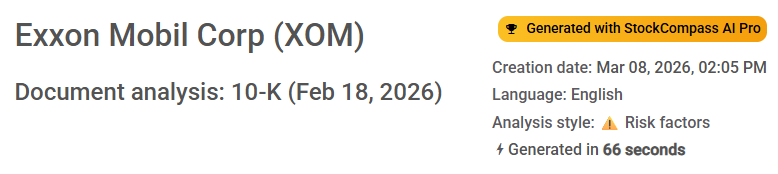
Document analyzed: Exxon Mobil Corp (XOM) — Form 10-K filed Feb 18, 2026.
Analysis style: Risk factors. Generated with StockCompass AI Pro.
Major geopolitical events often reveal structural vulnerabilities already present in corporate filings.
The latest conflict escalation between the United States and Iran has once again placed global oil markets under pressure. While Exxon’s most recent 10-K predates these events, it highlights the structural dynamics that become critical when geopolitical instability disrupts energy supply chains.
StockCompass transforms complex SEC filings into structured risk insights in seconds.
See how the analysis works
Exxon Mobil operates at the center of the global energy system. Its scale provides diversification across upstream production, refining operations, and international distribution.
However, that same scale exposes the company to the structural forces that dominate oil markets during geopolitical crises: supply disruption, commodity volatility, and capital cycle rigidity.
1. Geopolitical Supply Risk
Energy supply chains are deeply tied to geopolitical stability. Conflicts involving major producing regions can disrupt production, transportation routes, and global pricing dynamics.
The escalation involving Iran is particularly sensitive because of the strategic importance of the Persian Gulf and the Strait of Hormuz, one of the world's most critical oil shipping corridors.
When tensions escalate in the region, supply uncertainty typically pushes oil prices higher — benefiting producers in the short term while increasing volatility across the energy system.
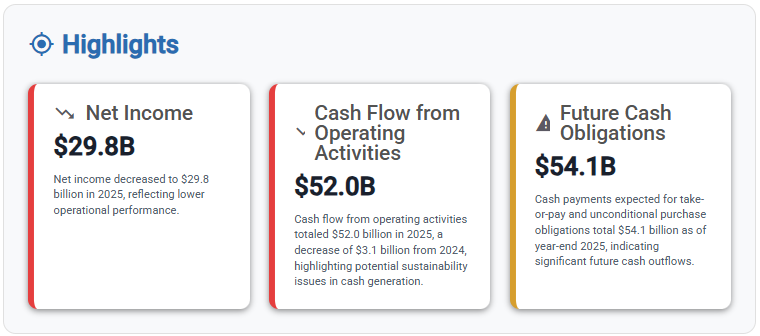
For Exxon, geopolitical instability creates a paradox: conflict can temporarily strengthen revenues while increasing long-term systemic risk.
2. Commodity Price Volatility
Exxon’s financial performance remains closely tied to commodity prices.
Oil price spikes often expand margins rapidly, particularly during supply disruptions. But those gains are inherently unstable because commodity markets react quickly to geopolitical developments, policy responses, and global demand expectations.
During geopolitical crises, the oil market becomes less predictable and more sensitive to narrative shocks.
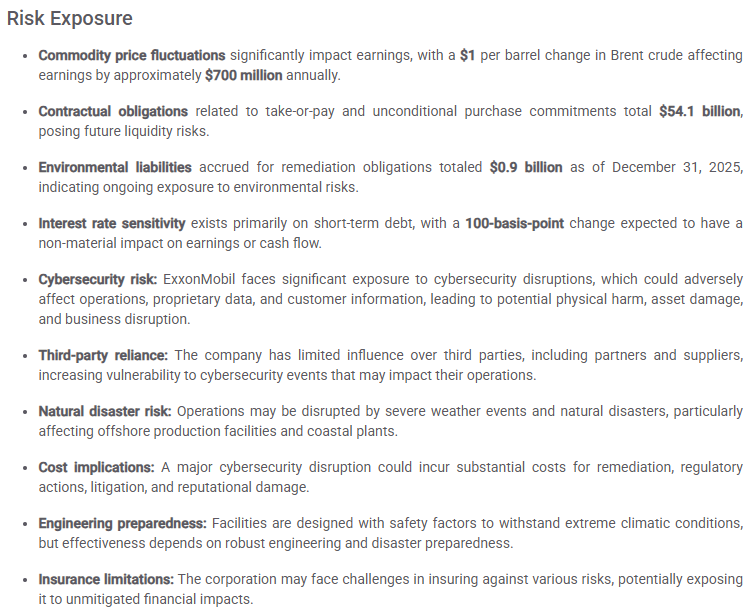
This creates an environment where short-term profitability may improve even as long-term uncertainty increases.
3. Capital Cycle Rigidity
Unlike many sectors, oil and gas operate under extremely long investment cycles. Large projects — including offshore drilling platforms, LNG infrastructure, and refining facilities — require multi-year development timelines and billions in capital commitments.
Once these investments are made, flexibility becomes limited.
If oil prices remain elevated, these investments can generate substantial returns. But if geopolitical shocks reverse or demand conditions shift, capital commitments remain fixed while revenues fluctuate.
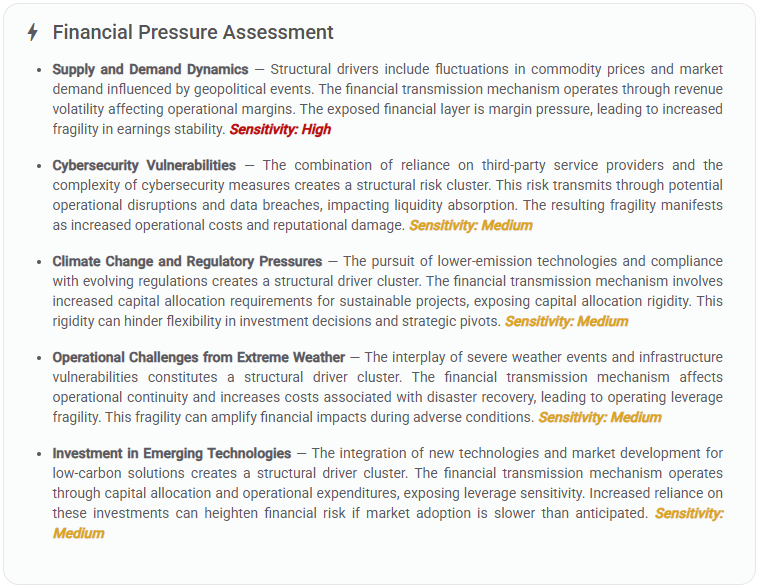
This structural rigidity is one of the defining characteristics of the energy sector.
4. Energy Security and Strategic Demand
Geopolitical conflicts often trigger renewed focus on energy security. Governments prioritize reliable supply sources and may strengthen relationships with large integrated producers capable of maintaining production under volatile conditions.
For Exxon, this environment can reinforce long-term demand for its global production and refining capacity.
At the same time, it can increase regulatory scrutiny and political pressure — particularly when energy prices spike during periods of geopolitical tension.
Structural Takeaway
The latest Exxon filing was not written in response to the Iran conflict. But it reveals the structural dynamics that become decisive when geopolitical shocks destabilize global energy markets.
Three forces dominate Exxon’s risk profile in such environments:
- Geopolitical supply disruption
- Commodity price volatility
- Capital cycle rigidity
When geopolitical tensions rise, these forces move from background risk to primary market drivers.
The result is a recurring paradox in energy markets: conflict can strengthen near-term revenues while simultaneously increasing structural fragility.
StockCompass converts complex SEC filings into structured risk insights in under a minute.
Try the platform and see how quickly filings turn into actionable analysis.
Explore StockCompass
View plans