Chevron’s 10-K: Oil Supply Risk in a World Where Hormuz Is Closed

Document analyzed: Chevron Corp (CVX) — Form 10-K filed Feb 24, 2026.
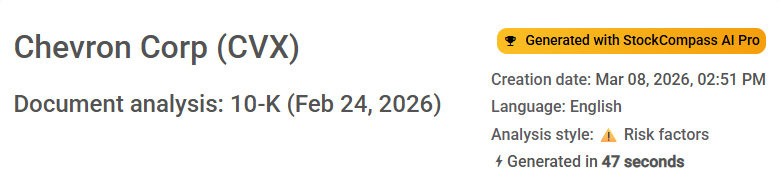
See how AI analyzes SEC filings in seconds and identifies structural risks hidden in financial reports.
Energy markets have entered a new geopolitical phase.
Following the escalation between the United States and Iran, the Strait of Hormuz is currently closed to U.S. shipping. This chokepoint normally carries roughly 20% of global oil supply.
When such a corridor becomes unstable, the risk is not only about global oil prices. It is about the structural exposure of oil producers.
Chevron’s latest 10-K reveals where these vulnerabilities lie.
This analysis was generated using StockCompass AI, which scans SEC filings to surface structural risks that investors often overlook.
Try the platform and analyze filings in seconds →
1. Commodity Prices Become the First Transmission Mechanism
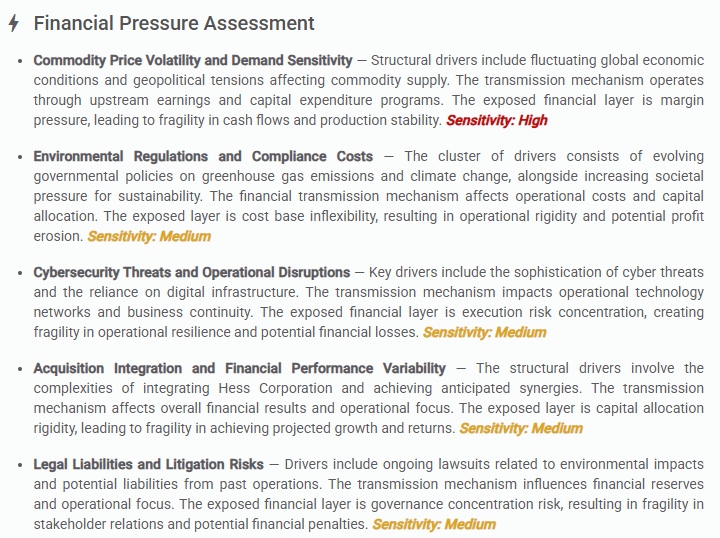
Chevron’s financial structure is deeply tied to commodity prices.
The 10-K explicitly highlights how fluctuations in crude oil and natural gas prices can materially affect:
- upstream earnings
- cash flows
- capital expenditure programs
When supply corridors such as Hormuz become unstable, the energy market shifts from a demand-driven system to a geopolitical supply system.
This dramatically increases price volatility.
For Chevron, that volatility is not simply a market fluctuation. It directly affects the company’s financial stability.
2. Liquidity Pressure During Commodity Cycles
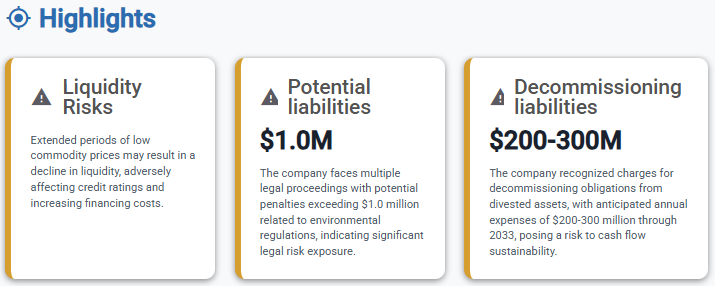
The filing also identifies a second structural pressure point: liquidity sensitivity.
Extended periods of low commodity prices could:
- reduce liquidity
- increase financing costs
- affect Chevron’s credit profile
In a geopolitical energy market, price swings can become more extreme. Sudden supply shocks may be followed by demand destruction or policy responses.
This creates a cycle where energy companies face alternating phases of windfall profits and liquidity stress.
3. Operational Exposure to Geopolitical Instability
Chevron’s operations span multiple politically sensitive regions.
The 10-K explicitly notes that geopolitical conflicts can disrupt operations and supply chains.
In an environment where shipping routes, sanctions, or regional conflicts alter global energy flows, operational disruptions become more likely.
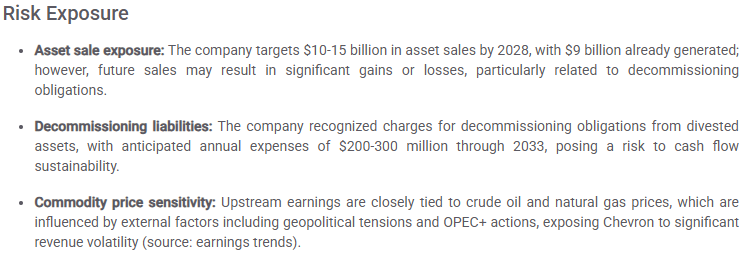
This risk is amplified by the capital intensity of oil projects, which require long development cycles and significant upfront investment.
4. Environmental and Regulatory Pressures Continue to Grow
Beyond geopolitical risk, Chevron also faces increasing regulatory and ESG pressures.
The filing highlights potential impacts from:
- greenhouse gas regulations
- environmental litigation
- changing energy policy
These factors can increase operational costs while simultaneously reducing long-term demand for hydrocarbons.
The result is a strategic environment where energy producers must balance short-term supply shocks with long-term structural transitions.

5. The Structural Insight
Chevron’s filing reveals a key structural reality.
The company’s financial stability is strongly tied to commodity prices, which themselves are heavily influenced by geopolitical events.
When supply corridors such as Hormuz become unstable, this dependency becomes a major vulnerability.
In other words, the global oil system is not only economic. It is geopolitical.
Final Insight
The closure of Hormuz to U.S. shipping illustrates how quickly the global energy system can shift.
Oil supply disruptions can move markets faster than traditional economic fundamentals.
Chevron’s 10-K shows how these shocks propagate through the financial structure of a major energy producer.
Understanding these structural risks requires analyzing the original filings — not just headlines.
StockCompass was built to make that analysis possible in seconds.
Analyze SEC filings instantly and uncover hidden structural risks.